
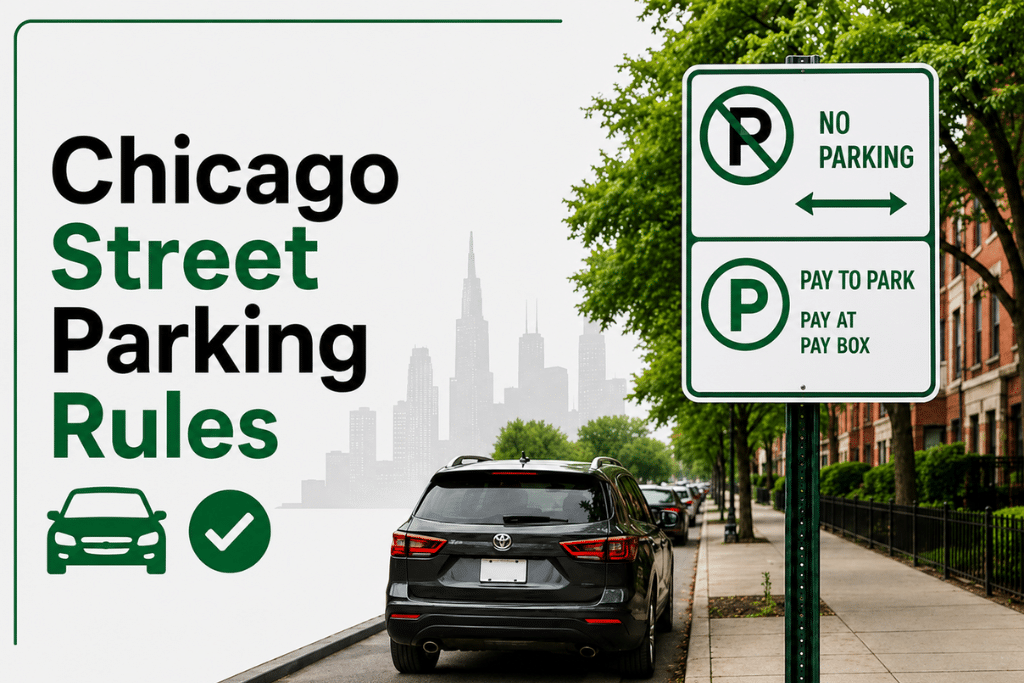
Chicago Street Parking Rules And Online Booking System Guide
Finding a legal parking spot in Chicago can feel challenging, especially during busy events, game days, and peak traffic hours. Understanding Chicago street parking rules helps drivers avoid tickets, towing, and unnecessary stress. Whether you’re a local resident, commuting to work, or visiting popular destinations, knowing where and when you can park is essential.
Chicago follows a variety of parking regulations, including permit parking zones, street cleaning schedules, metered parking restrictions, overnight parking rules, and temporary event-related restrictions. Missing a sign or misunderstanding a parking regulation can result in fines that quickly add up.
This guide explains the most important Chicago street parking rules, the online booking system, common mistakes drivers make, and practical ways to secure parking before arriving at your destination. This guide explains the most important Chicago street parking rules, the online booking system, common mistakes drivers make, and practical ways to secure parking before arriving at your destination.
Understanding Chicago Street Parking Signs
Street signs are the primary source of parking information throughout Chicago. Drivers should always read every posted sign before leaving their vehicle.
- Common parking signs may indicate:
- Tow-away zones.
- Snow route regulations.
- Loading zone restrictions.
- Street cleaning schedules.
- Residential permit parking only.
- No parking during specific hours.
- Temporary construction restrictions.
- A legal parking space during one part of the day may become restricted later. Always verify time limits, permit requirements, and event-related restrictions before parking.
Residential Permit Parking Zones
Many Chicago neighborhoods use residential permit parking programs to reduce congestion and prioritize local residents. Permit parking zones typically require vehicles to display the proper residential permit during designated hours. Drivers without permits may receive citations even if parking spaces appear available.
Visitors should pay close attention to posted zone numbers and restriction times. Parking legally in one neighborhood does not guarantee the same rules apply in another area. If you’re visiting a neighborhood near a stadium, entertainment district, or business corridor, checking parking options before arrival can help prevent violations.
Measured Parking Regulations
Chicago has thousands of metered parking spaces throughout the city.
- Parking rules generally include:
- Maximum time limits.
- Digital or app-based payment options.
- Enforcement during designated periods.
- Payment requirements during posted hours.
- Drivers who fail to pay the parking meter or exceed the posted time limit can be issued a parking ticket.
- Before leaving your vehicle, confirm:
- Enforcement hours.
- Maximum parking duration.
- Meter payment requirements.
- Nearby restrictions that may override meter usage.
Street Cleaning Restrictions
- Street cleaning signs often display:
- Specific dates.
- Alternate cleaning schedules.
- Restricted parking hours.
- Drivers should check local schedules and warning signs regularly, particularly during seasonal cleaning operations.
Overnight Parking Rules
Many visitors assume overnight street parking is allowed everywhere. However, Chicago has numerous restrictions that may impact overnight parking availability.
- Depending on the location, overnight parking limitations may include:
- Permit-only parking.
- Snow route restrictions.
- Temporary event controls.
- Commercial vehicle restrictions.
- Drivers planning to leave vehicles overnight should verify regulations beforehand to avoid fines or towing.
Winter Parking And Snow Route Regulations
Chicago winters bring additional parking rules designed to keep roads clear during snow events. Snow routes are marked throughout the city and may prohibit parking during snow emergencies.
- Violating snow route regulations can result in:
- Immediate towing.
- Fines.
- Additional recovery fees.
Because winter weather can create sudden restrictions, checking local notices before parking is especially important during colder months.
Event-Day Parking Restrictions
Major sporting events, concerts, and festivals can impact street parking availability.
- Areas surrounding popular venues often experience:
- Tow-away zones.
- Increased enforcement.
- Temporary parking restrictions.
- Resident-only parking controls.
Drivers attending events should avoid assuming street parking will be available near their destination.Planning ahead and choosing a designated parking location can help reduce delays and parking-related stress. For those attending events, many drivers prefer to reserve event parking in advance rather than searching for available spaces after arriving.
Common Parking Mistakes That Lead To Tickets
Many parking citations occur because drivers overlook simple details.
Common mistakes include:
- Ignoring Time Restrictions
- A parking space may be legal during the morning but restricted later in the day.
- Misreading Permit Requirements
- Residential permit zones often catch visitors by surprise.
- Missing Temporary Notices
- Construction projects, special events, and maintenance activities may create temporary parking restrictions.
- Assuming Empty Spaces Are Legal
- An open parking spot is not always a legal parking spot. Reading every sign carefully remains the best defense against parking violations.
Why Planning Parking Ahead Matters
- Benefits of planning ahead include:
- Reduced driving time.
- Lower stress levels.
- Fewer parking violations.
- Better event experiences.
- Increased confidence in unfamiliar areas.
Many drivers now use Parking Reservation Online solutions before traveling to busy parts of Chicago. Securing parking ahead of time eliminates uncertainty and allows drivers to focus on their destination instead of circling blocks looking for an available space.
How To Avoid Parking Problems In Chicago
The most effective parking strategy combines awareness and preparation.
- Before your trip:
- Check local parking regulations.
- Review street signs carefully.
- Verify permit requirements.
- Confirm event-day restrictions.
- Understand street cleaning schedules.
- Research available parking options nearby.
If you’re unsure how to reserve parking, planning before arrival can save valuable time and help avoid costly mistakes.
Many drivers also search for ways to find parking near me before entering busy neighborhoods, especially during major events and peak traffic periods.
Frequently Asked Questions (FAQs)
They include meter regulations, permit parking zones, street cleaning restrictions, and event-related parking rules.
Yes, but some areas have overnight restrictions, permit requirements, or seasonal regulations.
Check posted signs for permit zone numbers and enforcement hours before parking.
Your vehicle may receive a parking ticket if parked in a restricted cleaning zone.
Enforcement hours vary by location, so always check nearby signs and meter instructions.
Final Thoughts
Chicago street parking rules can vary from one neighborhood to another. Understanding permit requirements, street cleaning schedules, metered parking regulations, and event-related restrictions helps drivers avoid tickets and towing. A little preparation before your trip can make parking easier, safer, and more predictable. Whether you’re visiting for work, entertainment, or a sporting event, planning your parking strategy in advance can improve your overall experience.
Make Parking Easier With Advance Reservations
Avoid parking stress and save time by reserving your parking space with Wrigley Parking before heading to busy Chicago neighborhoods and event venues. Plan ahead and enjoy a smoother parking experience.