
Chicago Winter Parking Rules: Everything You Must Know Before Parking
Parking in Chicago during winter is less about finding a spot and more about avoiding a tow, a ticket, or a last-minute scramble when restrictions kick in. If you remember only one thing, winter rules can apply even when the street looks clear, and one missed sign can cost you hundreds in fees.
Chicago winter parking gets tricky fast because enforcement isn’t based on vibes; it’s based on posted restrictions, snow-trigger rules, and overnight bans on specific streets. That’s why the safest move (especially near busy areas like Wrigleyville) is to plan your parking before you drive, so you’re not circling blocks reading signs in the cold or rushing to move your car at 2:55 a.m.
What Actually Changes In Winter (And Why Do Drivers Get Surprised)?
Winter adds extra restrictions on top of normal city parking rules, and the gotcha is that some bans apply even if there’s no snow at the moment.
Here’s what makes winter different:
- Some streets have an overnight restriction during the winter season (the goal is to keep major streets clear for plows, buses, and emergency vehicles).
- Some streets become no-parking zones once snow hits a threshold (often described as a 2-inch trigger in public guidance).
- Street signs matter more than ever because winter rules are enforced by designation, not by what your block looks like.
What Is The Overnight Winter Restriction, And When Does It Apply?
Chicago’s winter overnight restriction is typically enforced from December 1 through April 1 on designated streets, and it applies on designated streets from 3:00 a.m. to 7:00 a.m.—even if there’s no snow.
What to do with that information (practical version):
- If you're parking late (dinner, concert, game night, holiday events), don't think I’ll move it if it snows.
- The overnight restriction can still apply regardless.
- Build a habit: before you leave your car, check whether the street is one of the designated routes and whether the time window overlaps your plans.
- If you'll be out late near Wrigleyville, assume demand + enforcement are both higher than normal (events stack traffic on top of restrictions).
What Is Snow Route Parking And How Is It Different?
A snow route is a street posted for snow operations, and parking can be prohibited when snow reaches a threshold (often communicated as 2 inches), so plows can clear the lane.
How drivers mess this up:
- They assume “I’m fine because I parked before it started snowing.
- But once restrictions are in effect, your car can still be in the way.
- They rely on memory instead of signage. Snow routes are posted and mapped, and boundaries can be non-obvious.
- Best practice (simple and fast):
- If you see a Snow Route sign, treat it like a high-risk parking choice in winter.
- If you don't want to gamble, reserve a spot so your plan isn't dependent on weather or enforcement timing.
How Much Can A Winter Mistake Cost (Ticket + Tow + Storage)?
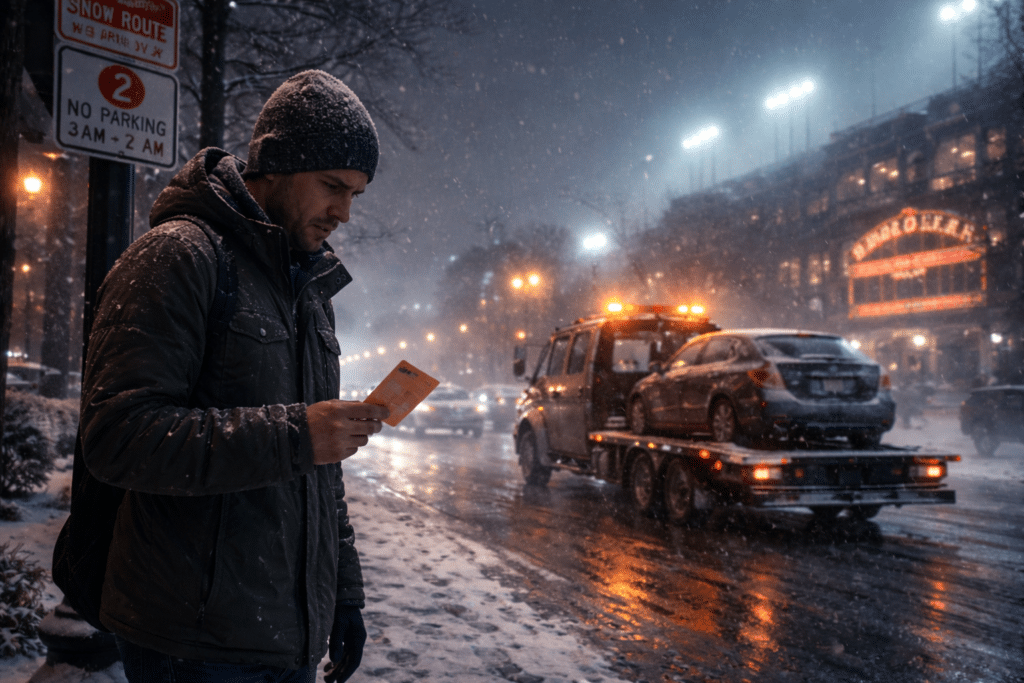
Reports commonly cite a towing fee (minimum $150), a ticket (often $60), and daily storage (reported as $25/day), which adds up quickly once a tow happens.
Why this matters for decision-making:
- A maybe legal street spot can become the most expensive parking you've ever chosen.
- When you compare that risk to a reserved spot with upfront pricing, the math gets simple, especially on event nights.
How Do I Know If The Street I'm On Is Affected?
You verify it using posted signage and, when you’re planning ahead, official maps/datasets that show snow route restrictions. Use this quick curbside checklist (30 seconds):
- Look for special winter signs (Snow Route / overnight restriction notices).
- Scan for time windows (many Chicago rules are time-based).
- Check for permit-only and tow zone indicators (winter doesn't replace normal rules; it piles on top).
- If the sign is unclear or you're rushing, treat that as a red flag, choose a reserved space instead of guessing.
For more information, explore: How to Make Parking Stress-Free When You Are in a Rush
How Does Reserving Ahead Help With Winter Rules Specifically?
Winter rules punish uncertainty. Reserving ahead reduces the two biggest winter risks: guessing legality and losing time when conditions change.
What reservations solve (real-world examples):
- You're running late and can't afford to hunt for signage → you go straight to a confirmed location.
- Snow starts coming down while you're at an event → you're not stuck moving your car at an awkward hour.
- Overnight rules overlap your plans → you avoid restricted streets entirely.
This is why reserving parking ahead is so effective during winter. on book ahead / skip the line / get a pass messaging.
Where Wrigley Parking is different (and why it matters for this topic): it’s purpose-built around Wrigley-area event parking, with a simple event-based booking flow and clear confirmation/pass delivery.
Can I Still Find Free Or Cheap Parking On Winter Weekends?
Sometimes, yes, but it’s inconsistent, and winter restrictions increase the penalty risk if you guess wrong. A practical way to approach “free” in winter:
- Treat free street parking like a bonus, not the plan.
- If you're going to a time-sensitive event (game, concert, timed entry), prioritize certainty over saving a few dollars, because winter towing costs erase any free win instantly.
Also explore: Where to Find Free Car Parking on Weekends
Conclusion
Chicago winter parking is less forgiving than it looks. Overnight bans and snow route rules apply based on street designation, not conditions at the curb. One missed sign can turn a quick stop into a ticket, a tow, and a long recovery process. Planning ahead, especially during busy winter nights or events, is the most reliable way to avoid unnecessary costs and stress.
Reserve Parking Before Winter Restrictions Catch You Off Guard
If you’re heading out during snow season, don’t leave parking to chance. Reserving a spot ahead of time with Wrigley Parking helps you avoid snow route parking in Chicago, overnight restrictions, and last-minute car moves when enforcement starts.
frequently asked questions
Chicago winter parking includes overnight restrictions and snow route rules that apply from Dec 1 to Apr 1, even if there is no snow on the ground.
Snow route parking in Chicago is restricted once snowfall reaches the posted threshold, often around 2 inches, so plows and emergency vehicles can clear the street.
No. If the street has an overnight winter restriction, parking is banned during the posted hours regardless of current weather conditions.
Check street signs carefully, know if you’re on a snow route, and reserve parking in advance when timing, weather, or events increase enforcement risk.